

High Performance Polymers
High-Performance Polymers for Industrial Additive Manufacturing
High-performance polymers represent the highest tier of materials that fused filament fabrication (FFF) systems can reliably process. PEEK, PEI (ULTEM™), PEKK, PPS, and PPSU are selected when parts must maintain mechanical integrity under sustained heat, chemical exposure, and cyclic mechanical loading, where standard engineering plastics are no longer viable.
These materials are not interchangeable upgrades to conventional polymers. They impose strict requirements on printer architecture, thermal control, process stability, and operator discipline. AlphaAMT supports and supplies advanced manufacturing teams working with high-performance polymers by combining industrial systems, materials expertise, and application engineering developed through early adoption of high-temperature FFF platforms.
What Makes a Polymer High Performance
In industrial additive manufacturing, high-performance polymers are evaluated based on their superior in-service performance.
These materials typically exhibit:
- High continuous service temperatures
- Retention of mechanical properties under load and heat
- Resistance to fuels, solvents, and aggressive chemicals
- Long-term dimensional and mechanical stability
Most high-performance polymers used in FFF belong to the PAEK family (PEEK, PEKK) or high-temperature amorphous polymers such as PEI, PPS, and PPSU. Their performance enables replacement of machined thermoplastics and, in some cases, metal when processed under tightly controlled conditions.
Why High-Performance Polymers Require Industrial Systems
Reliable printing of high-performance polymers depends on system-level thermal control, not isolated specifications.
Thermal Control and Crystallization
Semi-crystalline polymers like PEEK and PEKK need regulated chamber temperatures in order to control the crystallization behavior. Insufficient or unstable chamber heat leads to internal stress, warping, and delayed mechanical failure even when parts appear acceptable at print completion.
Adhesion and Interlayer Strength
Achieving functional Z-direction strength, there should be a constant extrusion temperature, even heat retention, and controlled cooling. Even minor changes in temperature have a high impact on interlayer bonding in high-temperature polymers.
Warping and Dimensional Stability
Large or thick parts amplify thermal gradients. Without uniform chamber heating and rigid machine architecture, dimensional accuracy cannot be maintained across long build cycles.
Repeatability and Scale
Printing a single successful part is not sufficient. Industrial workflows require predictable behavior across builds, operators, and shifts, something only fully enclosed, thermally controlled systems can deliver.
Industrial Platforms for High-Temperature Polymers
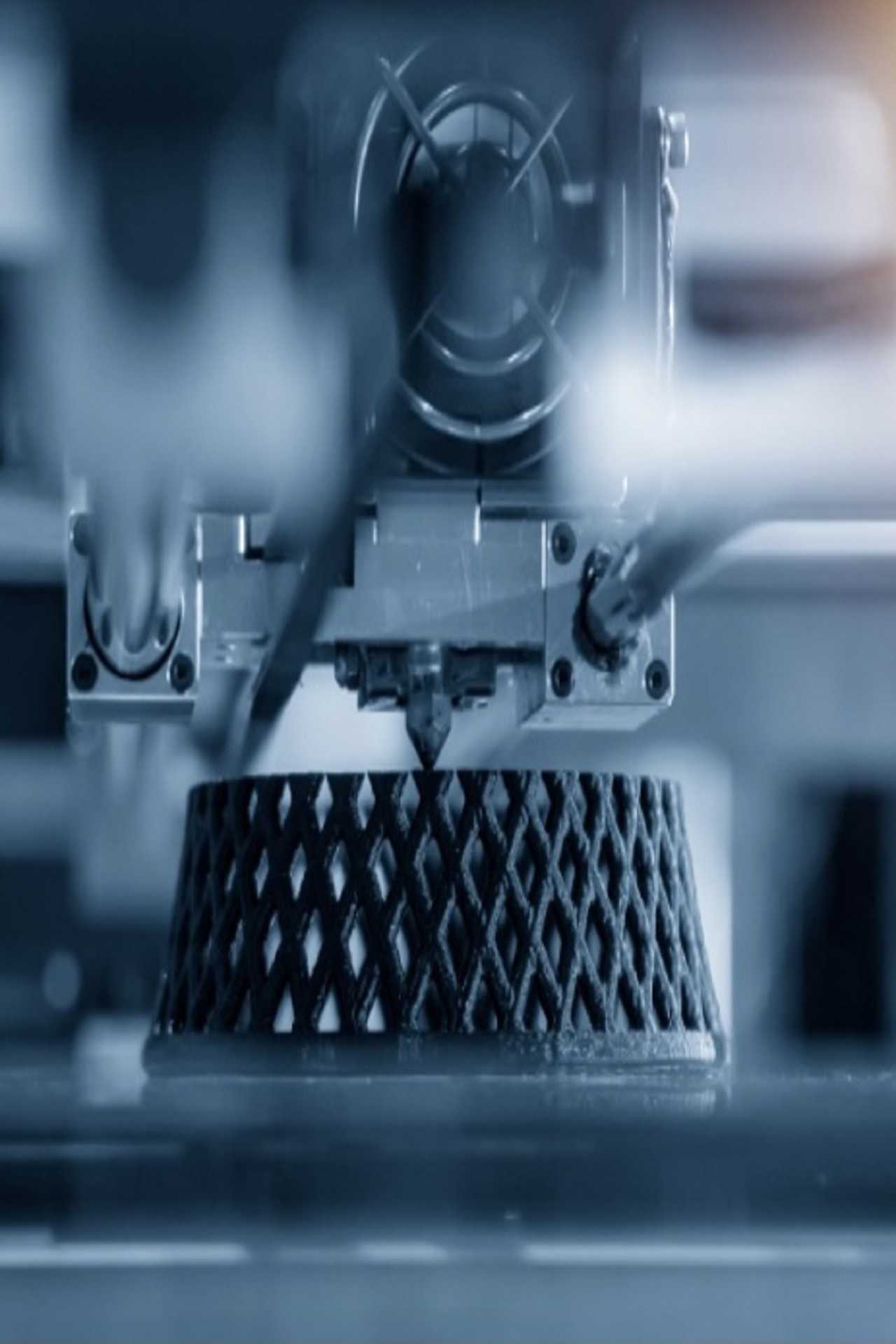
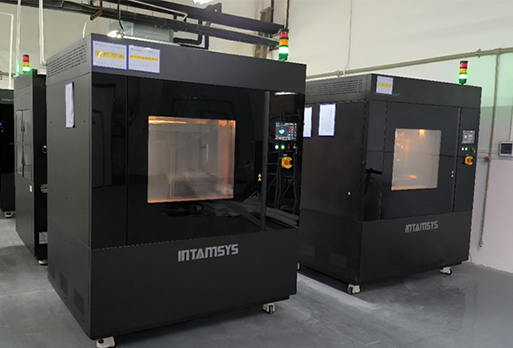
Our 3D printers are compatible with industrial platforms that are specifically designed to process high-temperature polymers. These platforms are designed around:
- Actively heated chambers capable of maintaining stable thermal environments
- High-temperature extrusion systems suitable for PAEK and PEI materials
- Rigid mechanical structures that preserve positional accuracy during long builds
- Insulated enclosures and controlled airflow to minimize thermal gradients
We are an early adopter of INTAMSYS high-temperature FFF platforms and support real-world deployment across aerospace, tooling, energy, and advanced manufacturing environments.
High-Performance Polymer Families in Practice
Material selection is application-specific, but commonly deployed high-performance polymers include:
PEEK and PAEK Variants
Used where high mechanical strength, chemical resistance, and thermal stability are required. Typical applications include aerospace components, industrial tooling, energy systems, and semiconductor equipment.
PEI (ULTEM™ 1010 / 9085)
Selected for dimensional stability, inherent flame resistance, and regulatory acceptance. Common in aerospace interiors, electrical housings, and structural components.
PPS and PPSU
Used in chemically aggressive or thermally demanding environments where improved processability relative to PAEK materials is required. Common in industrial, medical, and fluid-handling applications.
Each material family introduces unique processing constdraints that must be addressed at both the system and process levels.
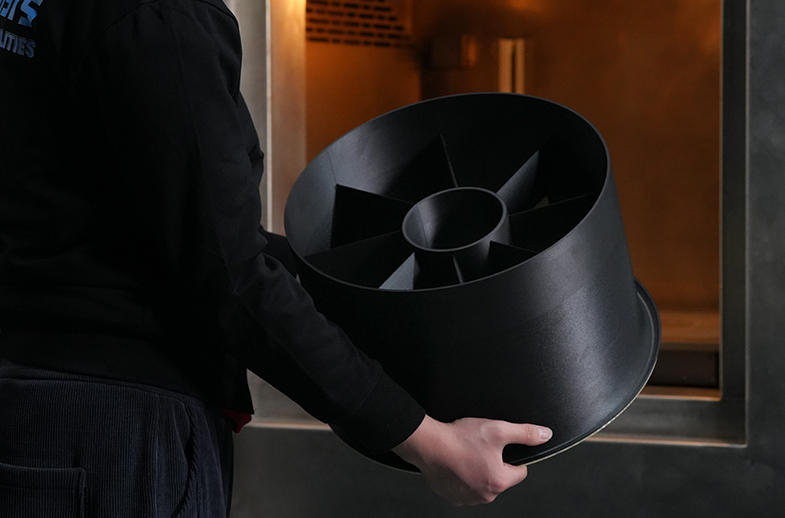
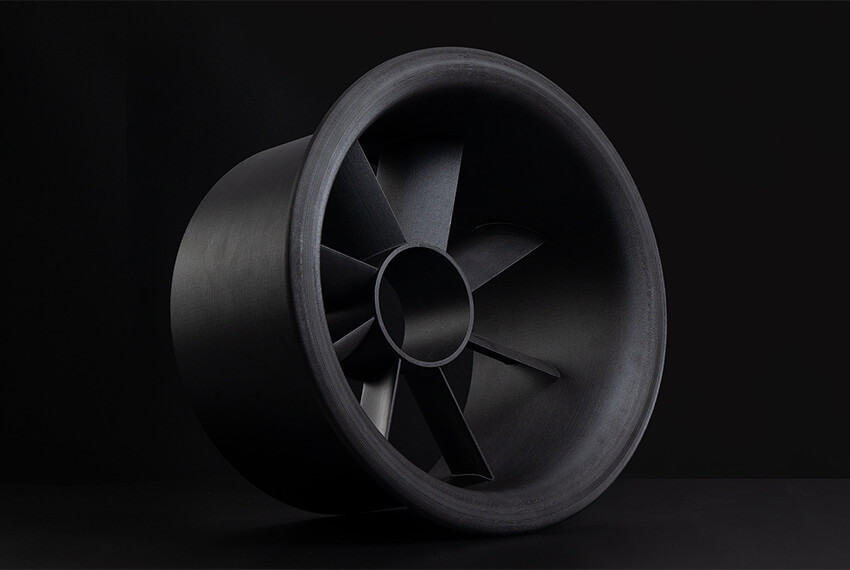
Consistent Industrial Filament Quality
High-performance polymer workflows depend on consistent filament quality. Industrial filaments manufactured under controlled standards reduce variability and support predictable results during long print cycles.
Consistent material quality helps engineering teams:
- Reduce print-to-print variation
- Improve dimensional and mechanical repeatability
- Establish stable baselines for process development
Validated filaments are often used as reference materials during qualification before application-specific optimization.


Pre-Configured Profiles for Controlled Setup
Some high-performance polymers are supplied with optimized baseline profiles in compatible slicing software. These profiles define initial extrusion, chamber, and speed parameters.
They are useful when:
- Establishing a known, repeatable starting point
- Maintaining consistency across teams or shifts
- Reducing early trial-and-error during qualification
These profiles are completely customizable. AlphaAMT supports further tuning based on part geometry, load direction, and service environment.
Validated Materials and Open Material Qualification
Our 3D printers support both validated material baselines and open material qualification, depending on application requirements.
- Validated materials provide predictable behavior and faster deployment
- Open materials allow teams to meet internal standards, regulatory requirements, or supply-chain constraints
AlphaAMT can also help teams define their process windows, thermal requirements, support strategies, and validation steps to ensure reliability beyond initial prints.
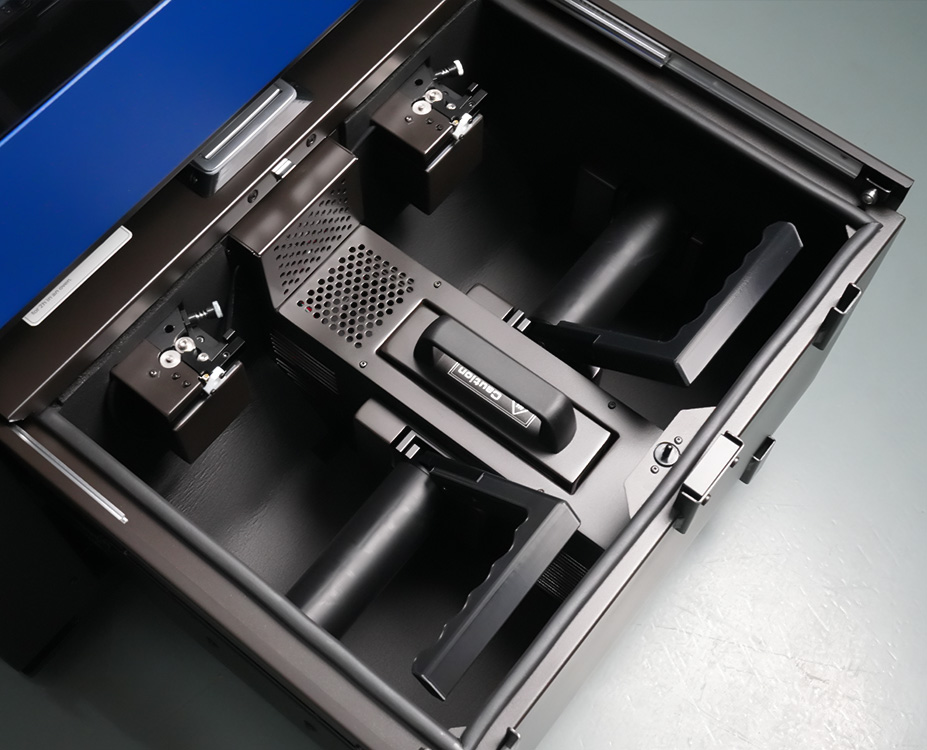
Material Qualification and Application Engineering
High-performance polymers cannot be treated as drop-in materials. Successful deployment requires structured qualification.
AlphaAMT supports customers through:
- Material suitability assessment based on service environment
- Definition of chamber, extrusion, and cooling windows
- Build surface and support strategy selection
- Mechanical and dimensional validation
- Transition from prototyping to controlled production
This ensures performance observed in testing translates to consistent behavior in real operating conditions.
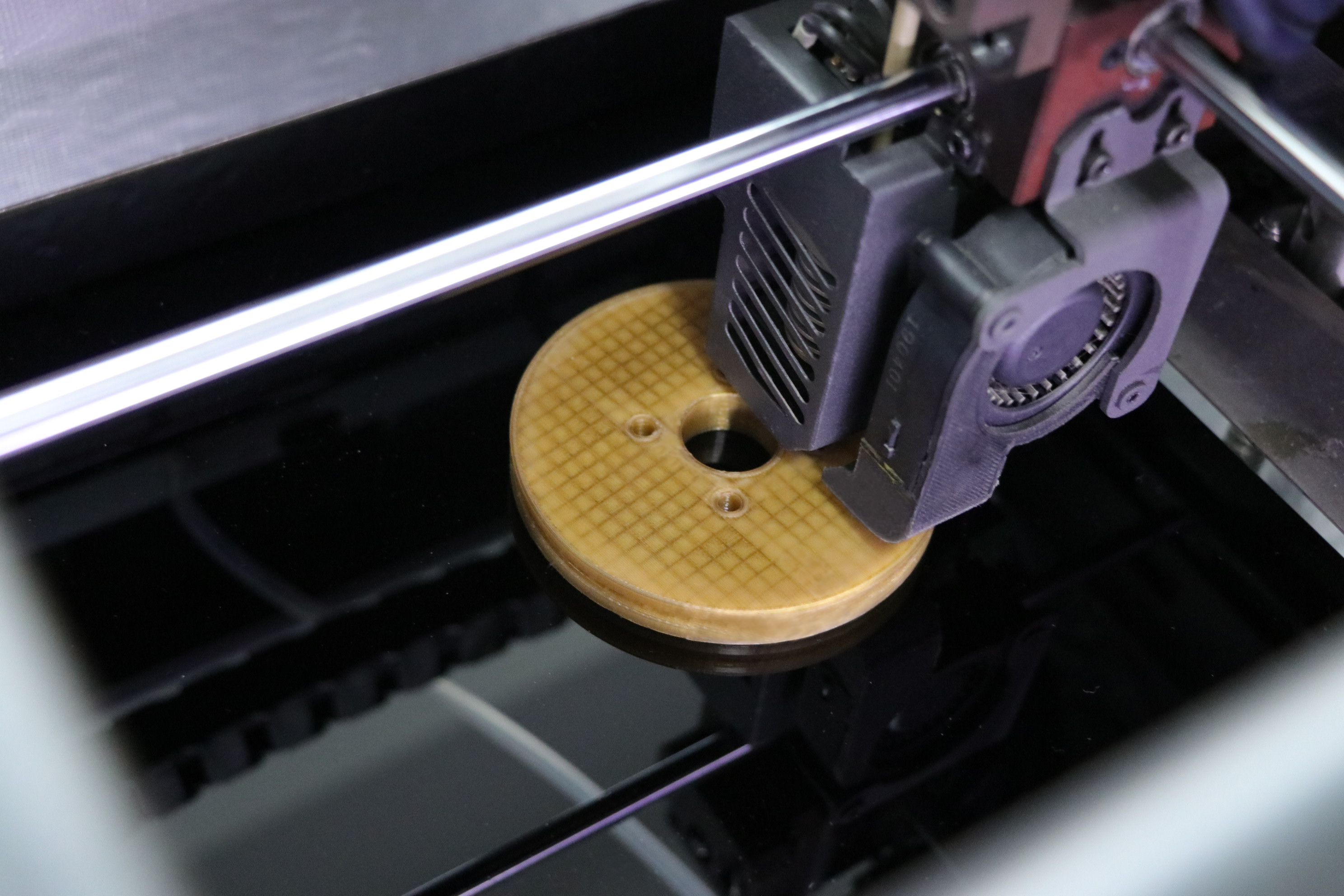
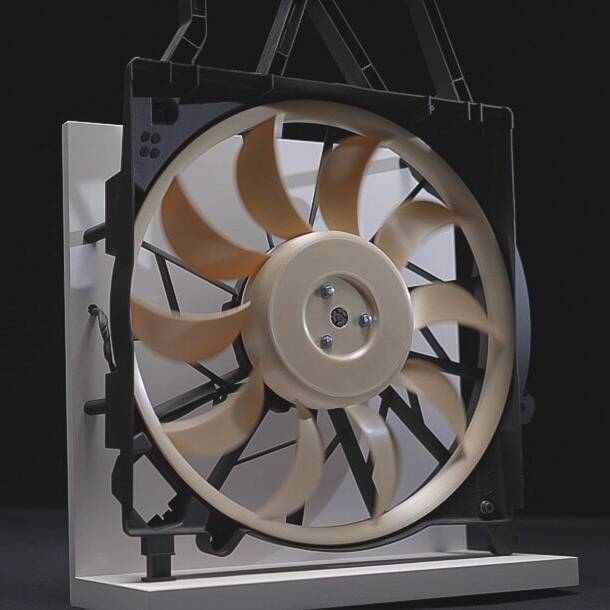
Explore High-Performance Polymers
Below you can explore high-performance polymers used in industrial additive manufacturing, including PAEK materials, PEI, PPS, and PPSU.
Each material listing includes:
- Material family and processing classification
- Typical application environments
- Compatibility with high-temperature FUNMAT systems
- Reference data to support evaluation and qualification
All materials shown can be evaluated with AlphaAMT’s application engineering support to ensure correct system configuration, process stability, and long-term performance.
Evaluate High-Performance Polymers for Your Application
If your application requires polymers that retain performance under heat, load, and chemical exposure, AlphaAMT can help determine whether high-performance polymers and the systems required to process them are appropriate for your workflow.