

Compare Printers
Compare FUNMAT Industrial 3D Printers
Selecting an industrial 3D printer is an engineering decision that should be driven by materials, thermal requirements, part size, and production intent
The FUNMAT lineup from INTAMSYS spans compact engineering systems through large-format, high-temperature production platforms. This comparison is designed to help engineers and technical decision-makers understand where each system fits and which one best supports their specific application.
As a regional technology partner in the Northeast USA, AlphaAMT works with customers to evaluate requirements, not just specifications, ensuring long-term performance and operational fit.
Key Factors to Compare Across the FUNMAT Lineup
When evaluating FUNMAT systems, engineers should typically assess four primary dimensions:
Step 1.
Materials and Thermal Capability
High-temperature polymers such as PEEK, PEKK and PPSU require controlled chamber conditions and stable extrusion. Systems differ significantly in how well they support these materials over long print cycles.
Step 2.
Build Size and Part Strategy
Large, monolithic parts require spacious chambers and uniform heating, while smaller functional components may benefit more from compact systems with faster turnaround.
Step 3.
Use Case: R&D vs Production
Lab and R&D environments prioritize flexibility and validation, whereas repeatability, automation, and throughput are more important in production workflow setups.
Step 4.
Automation and Process Control
As teams scale additive manufacturing internally, reduced operator intervention and traceability become increasingly important.
Understanding the FUNMAT Printer Lineup
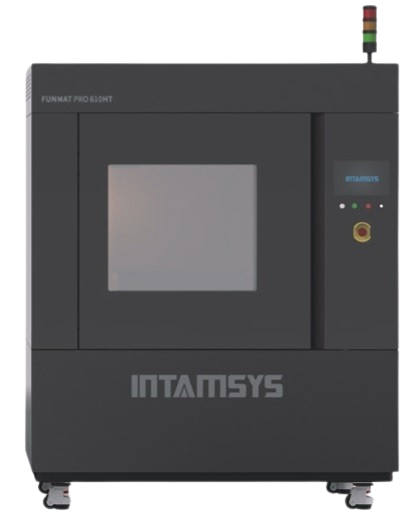
FUNMAT PRO
610HT
Best suited for: Large-format production and high-temperature polymers
The PRO 610HT is the most capable system in the lineup, designed for large parts and demanding materials such as PEEK, PEI, and PPSU. Its large build volume and high chamber temperatures support:
- Large, single-piece components
- High-strength tooling and fixtures
- End-use parts requiring thermal and mechanical stability
This system is typically selected when part size and thermal performance are non-negotiable.
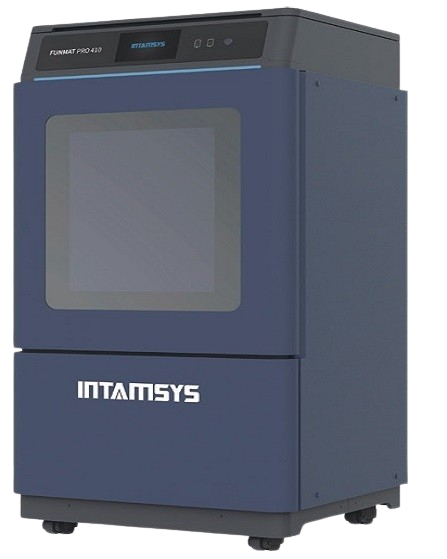
FUNMAT PRO
410
Best suited for: Mid-size engineering and production workflows
The PRO 410 optimizes footprint, material capability and cost efficiency. It also supports a large variety of engineering and high-performance materials and is easier to fit within labs and production cells.
Common use cases include:
- Functional prototyping
- Tooling and jigs
- Low-volume end-use production
It is often chosen by teams that need controlled thermal printing without the need for large-format infrastructure.
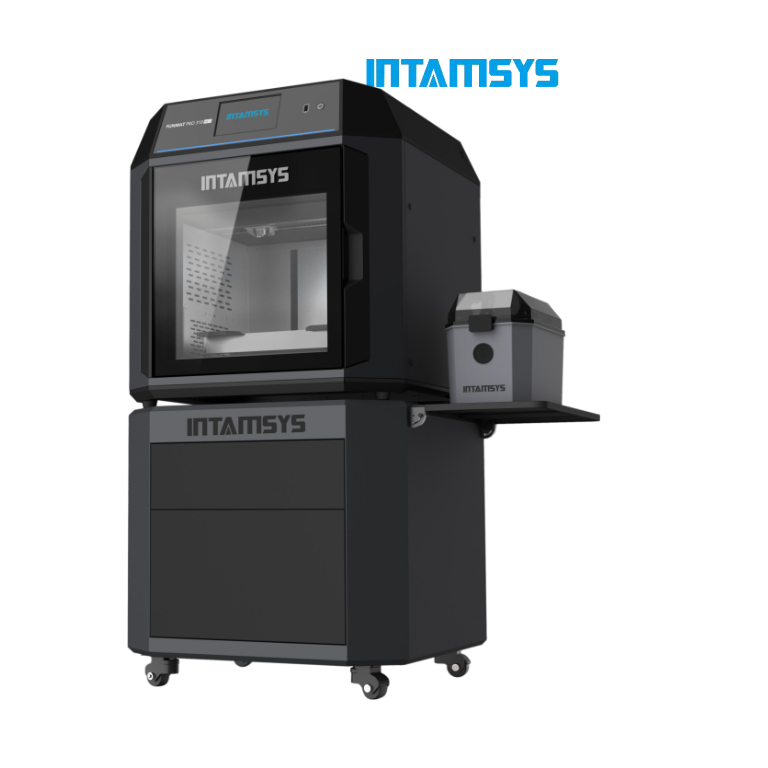
FUNMAT PRO
310 NEO
Best suited for: Engineering labs, R&D, and material validation
The PRO 310 NEO is a compact industrial system which is used in engineering materials and predictable print behavior in smaller area. It offers:
- Controlled chamber environments
- Reliable printing of engineering plastics and composites
- High throughput in a compact form factor
This system is best suited for R&D teams and laboratories that do not need automation on production levels.
FUNMAT PRO
310 APOLLO
Best suited for: Automated, small-batch production and PAEK materials
The PRO 310 APOLLO builds on the 310 platform with automation, repeatability, and production-oriented workflows.
It is engineered for:
- Continuous or batch production
- PAEK materials such as PEEK and PEKK
- Reduced operator intervention and improved traceability
APOLLO is typically chosen by teams scaling additive manufacturing into process-oriented manufacturing, rather than running experimental prints.
Comparison Table of Basic Equipment Parameters
Note: This table provides reference data. Final system selection should be based on application requirements and operating conditions.
| Parameter | FUNMAT PRO 310 APOLLO | FUNMAT PRO 310 NEO | FUNMAT HT | FUNMAT PRO 410 | FUNMAT PRO 610HT |
|---|---|---|---|---|---|
| Build Size | Single: 305 × 260 × 260 mm Dual: 260 × 260 × 260 mm | Single: 305 × 260 × 260 mm Dual: 260 × 260 × 260 mm | 260 × 260 × 260 mm | 305 × 305 × 406 mm | 610 × 508 × 508 mm |
| Supported Materials (Count) | 35 | 29 | 14 | 30 | 36 |
| Overall Dimensions | 700 × 655 × 750 mm | 700 × 655 × 700 mm | 543 × 501 × 645 mm | 728 × 684 × 1480 mm | 1710 × 1425 × 2080 mm (2350 mm with lighthouse) |
| Overall Weight | 80 kg | 80 kg | 63 kg | 230 kg | 1450 kg |
| Brochure | Download | Download | Download | Download | Download |
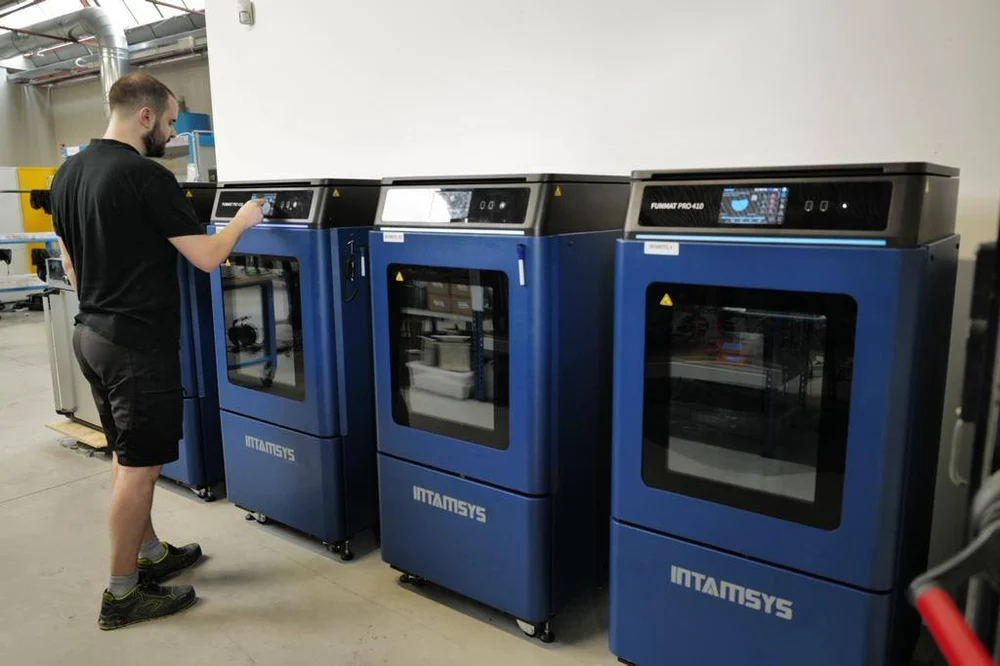
How We Can Help You Select The Best 3D Printer
AlphaAMT supports customers by:
- Evaluating materials, part requirements, and throughput goals
- Mapping applications to the appropriate FUNMAT system
- Supporting installation, training, and long-term operation
This ensures your selected system delivers value beyond initial deployment.
Talk to an Expert
If you are comparing FUNMAT printers and want to ensure the system aligns with your materials, parts, and production goals, AlphaAMT can help guide the evaluation process.