

Automotive Industry
Industrial 3D Printing Solutions for Automotive Manufacturing
Automotive engineering units need manufacturing tools that enable rapid product development, flexible tooling, and lightweight component testing. Industrial 3D printers offer a viable way to create operational prototypes, fixtures, and production aids from digital designs.
AlphaAMT provides industrial 3D printing equipment from INTAMSYS’s extensive product line to address automotive engineering processes using engineering polymers, reinforced composites, and high-performance materials. Such printers enable any automotive company to accelerate development cycles, reduce reliance on conventional tooling, and create custom manufacturing tools on production and engineering benches.
Using industrial printing platforms and industrial engineering-grade materials, automotive teams can conduct design validation, refine production processes, and create lightweight components more efficiently.
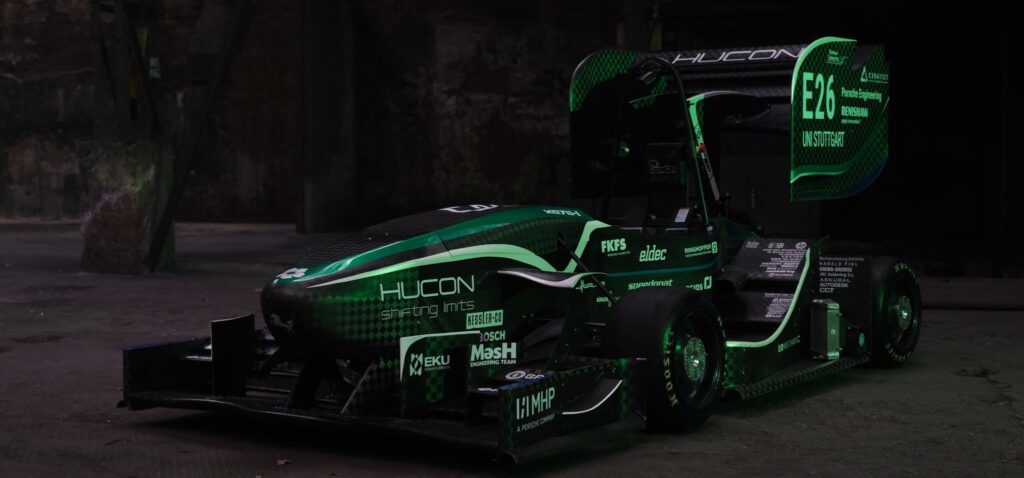
Industrial 3D Printers for Automotive Engineering
The automotive companies use industrial 3D printers to assist in various phases of vehicle development and manufacturing preparation. These systems are used to provide controlled thermal environments and compatibility with engineering materials used in the automotive industry, ranging from engineering prototypes to production-line tooling.
AlphaAMT supplies industrial printers designed to deliver reliable performance for automotive engineering teams.
Explore our range of INTAMSYS industrial 3D printers designed for automotive engineering applications below.
Automotive Applications Supported by Industrial 3D Printers
The automotive industry uses industrial 3D printers to create components for engineering development and manufacturing.
Functional Prototyping
Automotive engineering teams also often make use of industrial 3D printers to make functional prototypes to evaluate the geometry of components, their fit during assembly, and their mechanical characteristics.
These prototypes help engineers validate:
- assembly interfaces
- airflow and thermal performance
- structural performance under load
- system integration within vehicle assemblies
Since prototypes can be printed directly from digital models, engineering teams can rapidly iterate on design solutions without waiting for external tooling or machining.
Tooling and Production Fixtures
Manufacturing fixtures and assembly tools are among the most common automotive applications for industrial 3D printers. Automotive production lines often require specialized tooling that must be adapted quickly as production processes evolve.
Industrial 3D printers enable rapid production of:
- assembly alignment fixtures
- inspection gauges
- robotic end-of-arm tooling
- positioning guides for automated assembly systems
These components can be made of engineering polymers and reinforced composites, offering the desired rigidity and dimensional stability while remaining significantly lighter than metal alternatives.
Lightweight Component Testing
Minimizing vehicle weight without compromising structural performance is a significant engineering focus in the development of automobiles. Industrial 3D printers allow engineers to evaluate lightweight components using reinforced polymers before committing to production tooling.
These components may include:
- brackets and structural supports
- electronic housings and enclosures
- interior structural components
- sensor mounting structures
Carbon fiber–reinforced materials allow engineers to evaluate lightweight alternatives while maintaining the stiffness required for engineering validation.
Custom Production Aids
Automotive production environments often require specialized tools designed for specific assembly tasks. Industrial 3D printers allow teams to produce customized manufacturing aids that improve efficiency and reduce manual handling.
Examples include:
- ergonomic assembly tools
- protective covers for sensitive parts
- cable routing guides
- assembly positioning templates
These tools can be redesigned and printed quickly, so manufacturing teams can continue enhancing workflow without necessarily interrupting production operations.

Materials Used in Automotive 3D Printing
Material performance plays an important role in the use of industrial 3D printers for engineering and manufacturing support. Automotive applications often require polymers that provide reliable mechanical performance, dimensional stability, and resistance to heat or chemicals.
Explore our range of engineering polymers and reinforced materials used in automotive applications below.
Supporting Automotive Development and Production
Industrial 3D printers enable automotive manufacturers to accelerate development cycles and improve production flexibility.
By producing prototypes, fixtures, and manufacturing tools internally, teams can:
- Accelerate design validation
- Reduce dependence on external tooling suppliers
- Shorten development timelines
- Adapt production processes more quickly
Parts that previously required weeks of machining or supplier coordination can often be produced within hours or days.


Partner with AlphaAMT for Automotive 3D Printing Solutions
Selecting the right industrial printer and material combination requires understanding the requirements of automotive engineering environments.
AlphaAMT supports automotive manufacturers by providing:
- industrial 3D printing systems for engineering and production
- guidance on printer selection and deployment
- material evaluation for automotive applications
- operator training and ongoing technical support
This ensures automotive organizations can integrate industrial 3D printers into their engineering and manufacturing workflows with confidence.
Explore Additive Manufacturing Solutions for Automotive Engineering
If your organization is evaluating industrial 3D printers for automotive development, tooling, or production support, AlphaAMT can help your team identify suitable systems, materials, and workflows best suited to your applications.