

Industries
Industrial 3D Printing Across Engineering and Manufacturing Sectors
Industrial 3D printing is increasingly used across multiple industries to support engineering development, manufacturing preparation, and specialized production workflows. By combining advanced materials with controlled thermal processing environments, additive manufacturing enables organizations to produce complex components, manufacturing aids, and functional prototypes with greater flexibility than traditional manufacturing methods alone.
Engineering teams across aerospace, automotive, and advanced manufacturing sectors rely on industrial additive manufacturing systems capable of processing engineering-grade and high-performance polymers. These systems enable reliable part production while supporting design validation, tooling development, and specialized manufacturing needs.
AlphaAMT supplies and works with organizations across several industries to deploy INTAMSYS’s industrial 3D printing systems that integrate into real engineering and production environments.

Engineering Challenges Across Modern Industries
Manufacturers and engineering organizations face increasing pressure to accelerate product development while maintaining strict quality and performance requirements.
Common challenges include:
- long lead times for prototypes and tooling
- complex geometries that are difficult to machine
- demand for lightweight structural components
- rapid iteration during product development
- specialized or low-volume production requirements
Industrial additive manufacturing systems address many of these challenges by allowing organizations to produce functional components internally using engineering materials and controlled manufacturing processes.
Industries Supported by AlphaAMT
AlphaAMT supports organizations across industries where precision manufacturing, advanced materials, and engineering reliability are essential.
Automotive Industry
Industrial 3D printers are used by automotive manufacturers to accelerate product development and enhance manufacturing flexibility. The engineering teams design functional prototypes, tooling, and lightweight structural parts made of engineering polymers and reinforced materials.
Common automotive applications include:
- design validation prototypes
- manufacturing jigs and fixtures
- assembly line tools
- lightweight testing components
Industrial additive manufacturing allows automotive teams to evaluate design changes quickly while maintaining dimensional accuracy and mechanical stability.
Aerospace Industry
Aerospace engineering environments require materials and manufacturing processes that meet strict performance and regulatory requirements.
Aerospace organizations can now test lightweight parts, functional test parts, and manufacturing tools with advanced materials with industrial 3D printers capable of processing high-temperature polymers.
Typical aerospace applications include:
- lightweight structural components
- functional prototype development
- custom tooling and fixtures
- replacement or low-volume components
PEEK and PEI are high-performance polymers that give thermal stability and mechanical reliability in aerospace engineering processes.
Education and Technical Training
Engineering education and vocational training programs increasingly incorporate industrial additive manufacturing technologies into their curriculum.
Industrial 3D printers enable universities and technical training centers to train students to operate highly advanced manufacturing systems in real-world engineering settings.
Applications in education and research environments include:
- engineering design projects
- robotics and automation research
- material science experimentation
- advanced manufacturing coursework
By working with industrial equipment and engineering materials, students acquire hands-on experience aligned with contemporary manufacturing sectors.
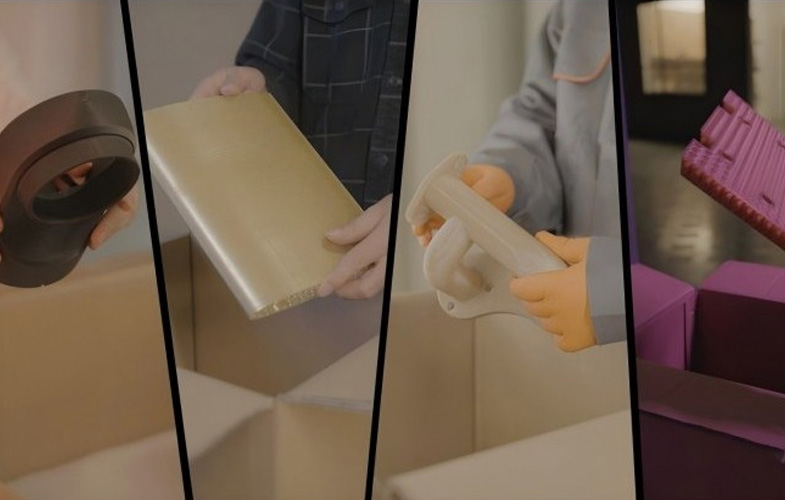
Industrial Materials Across Multiple Industries
Material capability plays a central role in industrial additive manufacturing. Many applications require polymers that provide mechanical strength, thermal stability, and dimensional accuracy.
Our Industrial 3D printers used across these industries support a range of engineering and high-performance materials, including:
- polycarbonate (PC)
- PC-ABS and engineering blends
- carbon fiber reinforced polymers
- high-performance polymers such as PEEK and PEI
These materials enable the engineers to manufacture workable components applicable in testing, tooling and specialized manufacturing conditions.
Integrating Industrial 3D Printing into Engineering Workflows
Successful deployment of industrial additive manufacturing requires more than selecting the right printer. Organizations must evaluate material compatibility, process control, and application requirements.
AlphaAMT supports customers across industries by providing:
- consultation on system selection and deployment
- installation and commissioning of industrial 3D printers
- operator training and workflow development
- ongoing technical service and application guidance
This approach ensures additive manufacturing systems operate reliably within real engineering and manufacturing environments.

Integrating Industrial 3D Printing into Engineering Workflows
Successful deployment of industrial additive manufacturing requires more than selecting the right printer. Organizations must evaluate material compatibility, process control, and application requirements.
AlphaAMT supports customers across industries by providing:
- consultation on system selection and deployment
- installation and commissioning of industrial 3D printers
- operator training and workflow development
- ongoing technical service and application guidance
This approach ensures additive manufacturing systems operate reliably within real engineering and manufacturing environments.
Work With AlphaAMT
If your organization is evaluating industrial 3D printers for engineering development, manufacturing preparation, or materials research, AlphaAMT can help your team determine which systems and materials are best suited to your application.