

Tooling & Manufacturing Applications
Industrial 3D Printers for Production Workflows
Modern manufacturing environments increasingly use industrial 3D printers to facilitate production, tooling, and engineering validation. By combining engineering-grade polymers, reinforced composites, and high-performance materials, industrial additive manufacturing enables manufacturers to produce functional components, custom fixtures, and validation prototypes directly from digital designs.
For engineering and manufacturing teams, the value is not in experimental prototyping alone. It is in the ability to support real production workflows with tools and parts that can be designed, validated, and deployed faster than many conventional methods allow.
“AlphaAMT supplies and supports manufacturers with a wide range of INTAMSYS’s industrial 3D printing systems, material guidance, and implementation support to help integrate additive manufacturing into production environments with practical, repeatable results as a reseller. Explore our full range of products.”
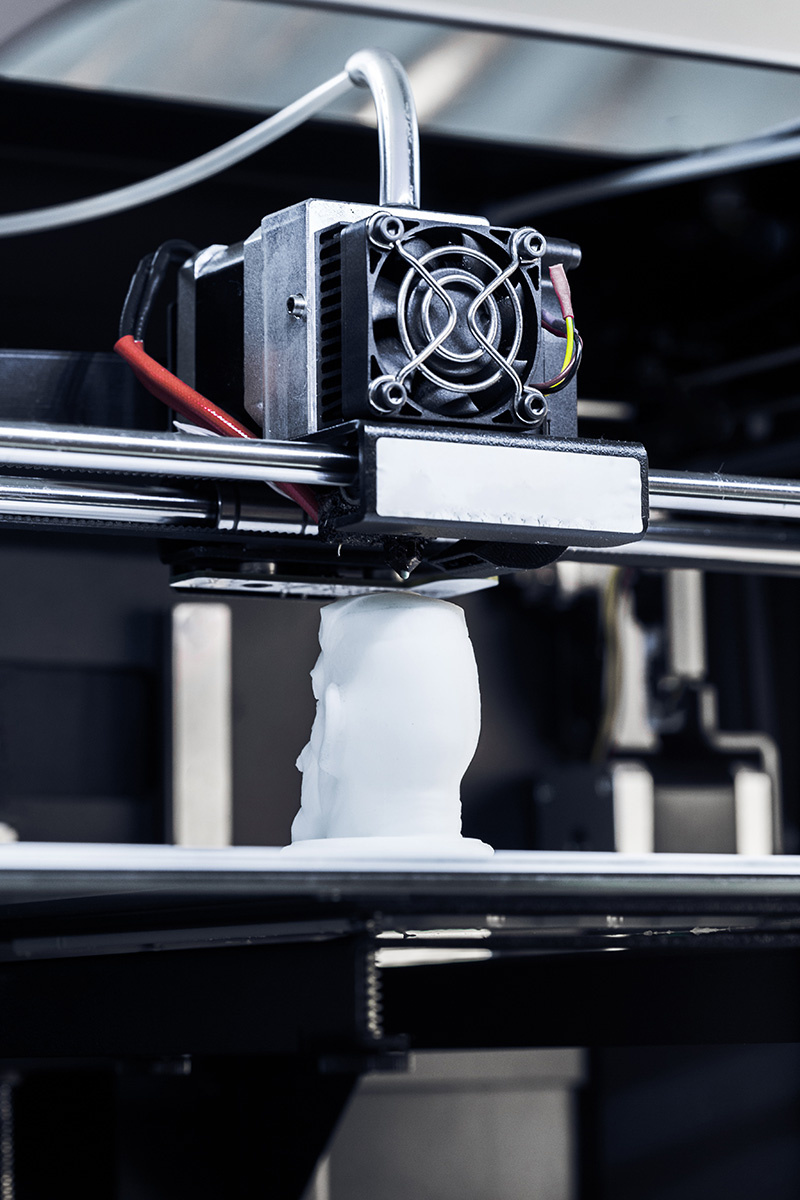
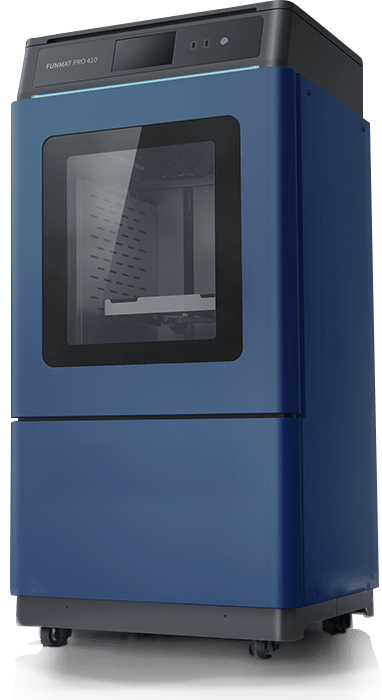
How Industrial 3D Printing Fits into Manufacturing
Machining, molding, and fabrication are now combined with industrial 3D printing to overcome production challenges that demand flexibility, speed, or customization.
Manufacturing teams commonly use industrial 3D printers when they need to:
- Produce low-volume or custom parts without dedicated tooling
- Create jigs and fixtures tailored to specific work cells
- Validate engineering designs with functional prototypes
- Reduce delays caused by external tooling or long machining lead times
- Adapt quickly to design revisions or production changes
Rather than entirely replacing conventional manufacturing, industrial additive manufacturing extends what engineering teams can do internally.
End-Use Parts for Low-Volume and Custom Production
Industrial 3D printing allows manufacturers to produce functional end-use components without other specific tooling. The method is commonly adopted in cases where part volumes are low, designs are regularly changed, or the geometry is too complex to be manufactured using conventional techniques.
Typical applications include housings, structural brackets, ducts, protective covers, and customized mechanical interfaces. Engineering and high-performance polymers allow these parts to maintain dimensional stability and mechanical integrity in demanding environments.
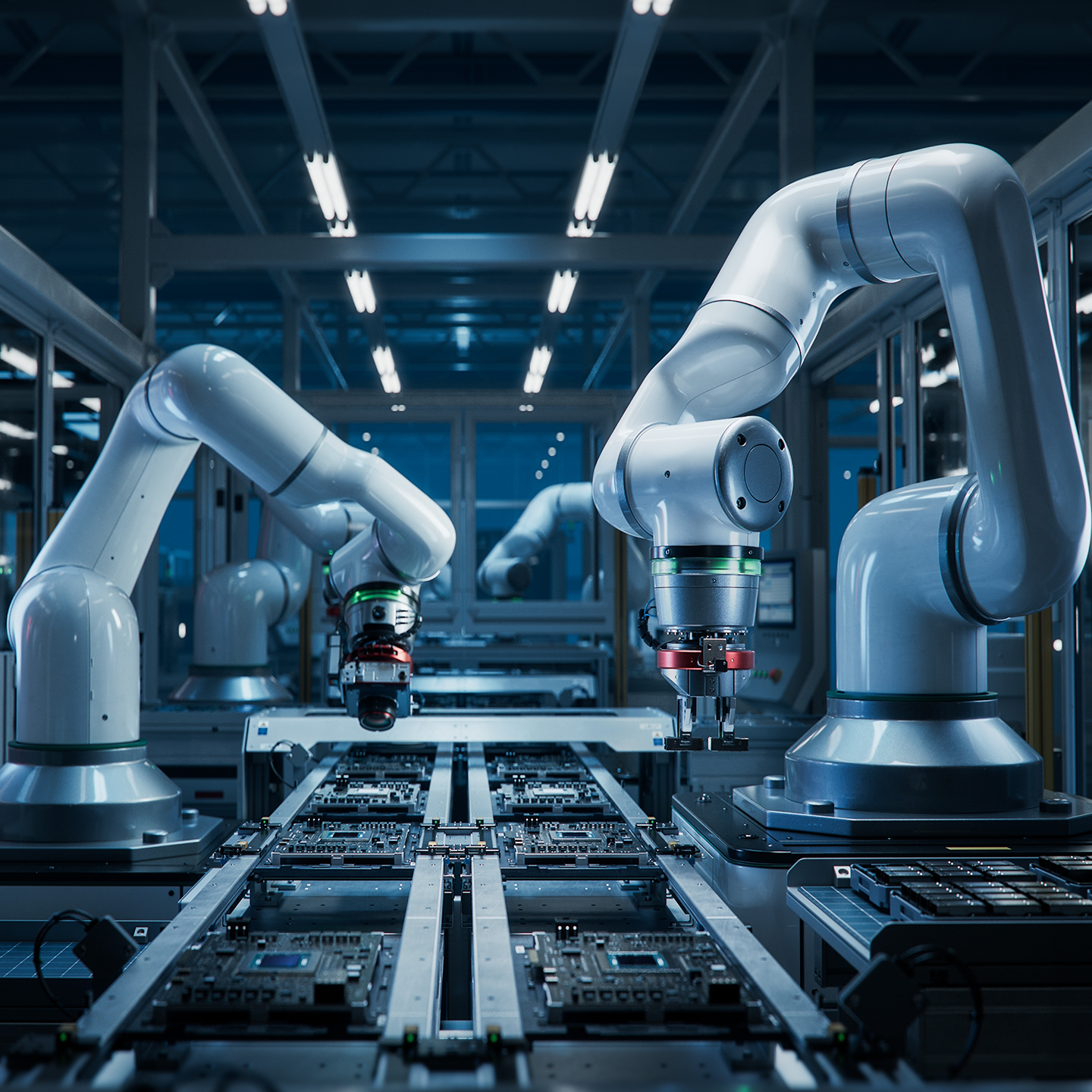
Key Features
Design Freedom
Complex geometries and customized components can be produced directly from CAD models without the constraints of traditional tooling.
Small-Batch Production
Industrial 3D printing supports low-volume manufacturing where molds or tooling would be impractical.
Digital Inventory
Parts can be stored as digital files and produced on demand.
Jigs and Fixtures for Production Efficiency
The most common industrial uses of additive manufacturing include jigs and fixtures. These tools are useful for maintaining uniform position, alignment, and inspection in production processes.
Industrial 3D printers enable manufacturers to produce assembly fixtures, inspection gauges, robotic end-of-arm tooling, and workholding devices to meet individual production tasks.

Key Features
Improved Assembly Accuracy
Custom fixtures help maintain consistent positioning during manufacturing and quality inspection.
Process Optimization
Tools can be designed specifically for individual production steps, improving workflow efficiency.
Lightweight Tooling
Polymer and composite fixtures provide rigidity while remaining lighter than traditional metal tools.
Functional Prototyping for Engineering Validation
Functional prototyping enables engineering departments to test designs prior to engaging in production. Industrial 3D printers enable the construction of prototypes using engineering materials with behavior similar to production materials.
These prototypes are primarily used for appearance testing, assembly testing, mechanical testing, and early-stage design refinement.
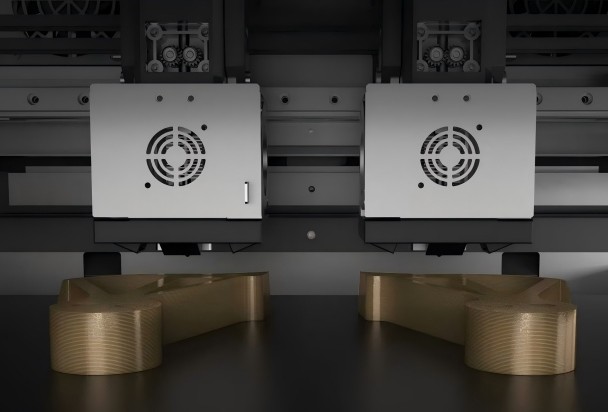
Key Features
Rapid Design Iteration
Prototypes can be produced quickly to support faster engineering development cycles.
Real-World Testing
Functional prototypes allow engineers to evaluate performance under realistic conditions.
Advanced Materials
Engineering polymers and high-performance materials enable prototypes that closely represent final parts.
Materials for Real Manufacturing Conditions
Industrial 3D printing supports manufacturing workflows by enabling the processing of materials beyond basic prototyping plastics.
Common material categories used in tooling and production applications include:
Engineering Polymers
Materials such as PC, PE, ABS, and reinforced engineering-grade polymers are widely used for tooling, fixtures, and production components. See the FUNMAT PRO 410 for engineering polymer applications.
Reinforced Composites
Carbon fiber- and glass fiber-reinforced materials improve stiffness, reduce creep, and enhance dimensional stability, making them well-suited for jigs, fixtures, and lightweight structural components. Reinforced composites, including carbon fiber, fiberglass, and lightweight structural materials, are best processed on the FUNMAT PRO 310 Apollo
High-Performance Polymers
PEEK, PEKK, and PEI materials are used in applications that demand high thermal, chemical, and mechanical stability under challenging operating conditions.
Such material solutions enable manufacturers to shift towards basic prototyping into tooling, validation, and actual production support. Materials such as PEEK, PEI, and PC-ISO are well-suited for extreme manufacturing conditions and are best processed on the FUNMAT PRO 610HT.
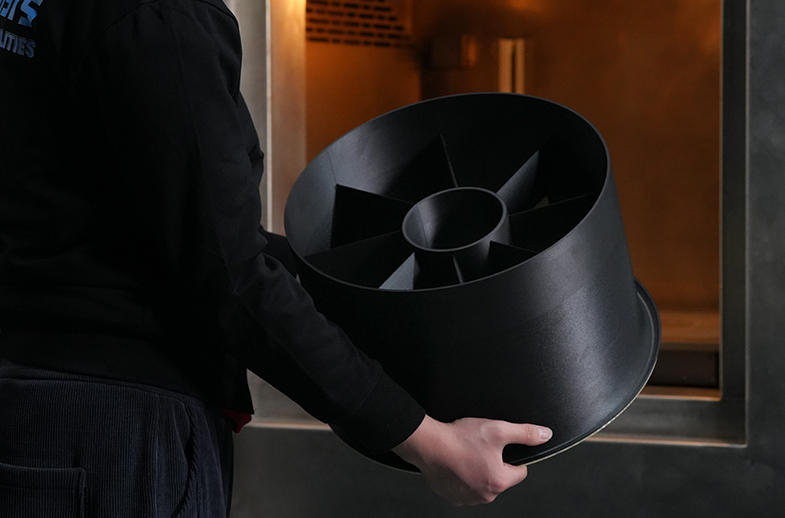
Industrial 3D Printers for Tooling and Manufacturing
Manufacturing applications demand printers that can withstand thermal processing, deliver repeatable output, and support engineering and high-performance materials.
Explore our range of industrial 3D printers used in tooling and manufacturing applications below.
These systems are commonly used to support:
- end-use component production
- custom jigs and fixtures
- functional prototype development
- lightweight tooling and assembly aids
INSTAMSYS’s industrial platforms, such as the FUNMAT series, provide the thermal stability and precision needed for demanding manufacturing workflows. Intamsys range of validated 3D printers used in tooling and manufacturing workflows, including the FUNMAT PRO 410, FUNMAT PRO 310 Neo, and FUNMAT PRO 610HT.
Materials for Production Parts, Tooling, and Validation
Material selection is central to successful manufacturing applications. Different tooling, fixture, and part requirements call for different combinations of stiffness, thermal resistance, surface quality, and dimensional stability.
Explore our range of engineering polymers, reinforced composites, and high-performance materials used in tooling and manufacturing applications below.
These materials allow engineering teams to select the right balance of printability and in-service performance for each production task.


Supporting Manufacturing Teams with Industrial 3D Printing
Effective implementation of industrial 3D printing in the manufacturing sector requires more than access to hardware. The engineering teams should also take into account the compatibility of materials, print conditions, and workflow integration.
AlphaAMT supports manufacturers through:
- Consultation on printer selection and deployment
- Material evaluation for tooling and production needs
- Installation and commissioning
- Operator training and workflow development
- Ongoing technical support and application guidance
This ensures that industrial 3D printing is not used as a standalone prototyping system but rather as a practical manufacturing tool.
Evaluate High-Performance Polymers for Your Application
If your application requires polymers that retain performance under heat, load, and chemical exposure, AlphaAMT can help determine whether high-performance polymers and the systems required to process them are appropriate for your workflow. Unsure which printer fits your production needs? Compare our industrial 3D printers →